All About Oxygen Absorbers
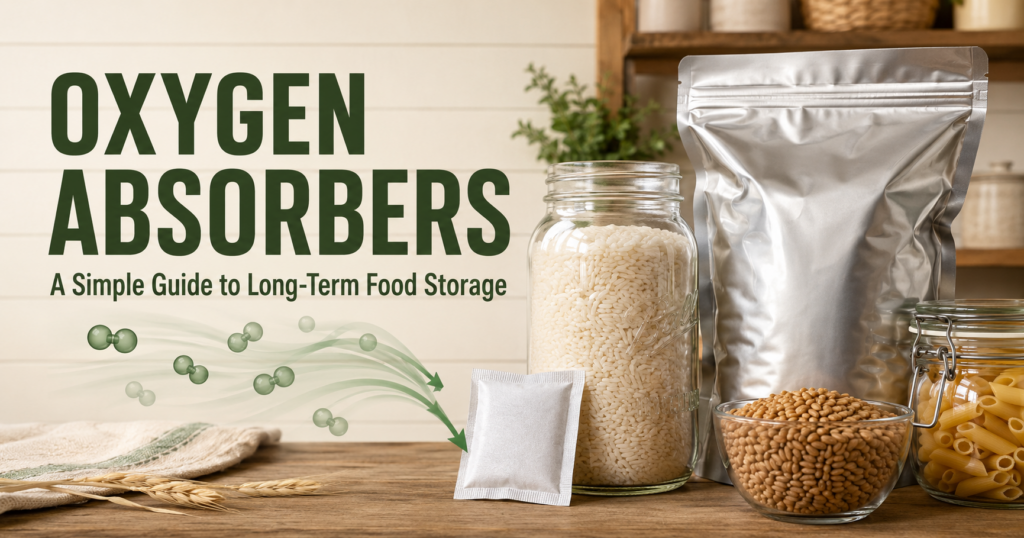
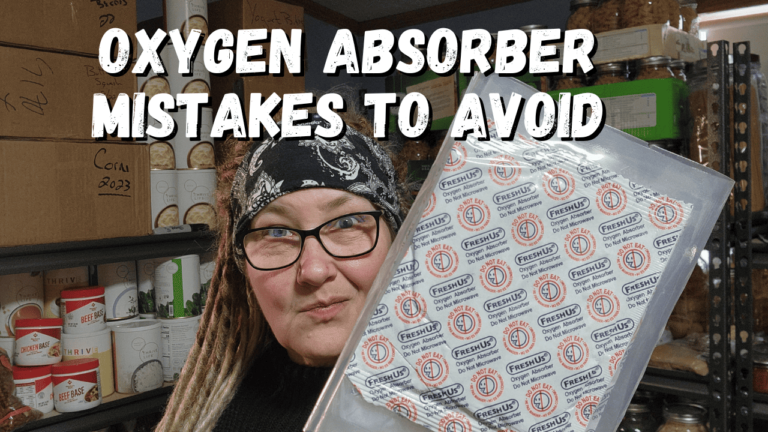
Oxygen absorbers are small, food-safe packets placed inside sealed food-storage containers to remove oxygen from the air surrounding dry foods.
They are not the same as silica-gel packets:
- Oxygen absorbers remove oxygen.
- Silica gel absorbs moisture.
- Oxygen absorbers do not make damp food safe for storage.
How do they work?
Most contain finely powdered iron. After the packet is exposed to air, the iron reacts with oxygen and rusts. This reaction traps the oxygen inside the packet.
When used in an airtight container—typically a properly sealed Mylar bag or canning jar—the absorber removes nearly all available oxygen. A sealed Mylar bag may pull tightly around the food, but it does not always look vacuum-packed. That does not necessarily mean the absorber failed.
Why use them?
Removing oxygen helps:
- Slow rancidity in foods containing small amounts of fat
- Preserve flavor, color and nutritional quality
- Discourage mold and other oxygen-dependent spoilage organisms
- Prevent pantry insects from surviving or reproducing
- Extend the storage life of suitable dry foods
They are especially helpful for long-term storage because ordinary plastic bags and food-grade buckets allow oxygen to pass through slowly. Mylar provides the oxygen barrier; the absorber removes the oxygen trapped inside.
Good foods for oxygen absorbers
Use them only with foods that are thoroughly dry and generally contain about 10% moisture or less, such as:
- White rice
- Wheat berries
- Rolled oats
- Dry pasta
- Dry beans and lentils
- Flour
- Dry corn
- Nonfat dry milk
- Commercially dehydrated foods intended for long-term storage
- Properly freeze-dried foods
Foods that should not be stored with them
Do not use oxygen absorbers with moist or incompletely dried foods. A low-oxygen environment combined with moisture can create conditions favorable to botulism.
They are also usually a poor choice for:
- Brown rice
- Whole-wheat flour
- Nuts and seeds
- Granola
- Chocolate
- Other high-fat foods
Removing oxygen may slow rancidity, but it cannot stop the fats from eventually going bad. These foods are generally better rotated frequently or stored in the freezer.
The basic process
- Place completely dry food in a Mylar bag or airtight canning jar.
- Add the correctly sized absorber.
- Seal the container immediately.
- Label it with the food and packaging date.
- Store it somewhere cool, dark and dry.
Work quickly once the package of absorbers is opened. Put unused packets into a small airtight glass jar or vacuum-sealed bag right away.
Oxygen absorbers are useful, but they are only one part of the system: dry food + proper packaging + correct absorber size + an airtight seal + cool storage.
The “cc” printed on an oxygen absorber tells you how many cubic centimeters of oxygen it can remove—not the absorber’s physical size.
Here is a simple, slightly generous sizing chart for completely dry foods:
Canning jars
| Jar size | Dense foods* | Bulky foods** |
|---|---|---|
| 4-ounce jar | 50 cc | 50–100 cc |
| Half-pint | 50 cc | 100 cc |
| Pint | 100 cc | 100–200 cc |
| Quart | 200 cc | 200–300 cc |
| Half-gallon | 300 cc | 400–500 cc |
| Gallon jar | 500 cc | 750–1,000 cc |
Mylar bags
| Filled bag size | Dense foods* | Bulky foods** |
|---|---|---|
| Pint | 100 cc | 100–200 cc |
| Quart | 200 cc | 200–300 cc |
| Half-gallon | 300 cc | 400–500 cc |
| 1 gallon | 500 cc | 750–1,000 cc |
| 2 gallons | 1,000 cc | 1,500–2,000 cc |
| 5 gallons | 2,000–2,500 cc | 2,500–3,000 cc |
| 6 gallons | 2,500–3,000 cc | 3,000–3,500 cc |
*Dense foods include white rice, wheat berries, dry beans, flour and cornmeal.
**Bulky foods contain more air between the pieces—pasta, rolled oats, freeze-dried foods and dehydrated vegetables.
My easiest rule of thumb
For general pantry use, these three sizes will handle almost everything:
- 100 cc: pint jars
- 200–300 cc: quart jars
- 500 cc: half-gallon jars and one-gallon Mylar bags
- 2,500 cc: five-gallon Mylar bags filled with dense foods
You can combine smaller absorbers. For example:
- Two 100 cc packets equal 200 cc.
- Five 100 cc packets equal 500 cc.
- Five 500 cc packets equal 2,500 cc.
Using a larger absorber than necessary generally does not hurt the food—it simply costs a little more. Using too small an absorber may leave enough oxygen behind to reduce the benefit.
Measure the filled container
Choose the absorber according to the amount of space you actually seal, not merely the package label. If you fill a five-gallon Mylar bag with only one gallon of food and press out the excess air before sealing, size it according to the remaining filled volume.
Bulky foods require more absorber capacity because air remains trapped between the pieces. Even though air is approximately 21% oxygen, the absorber also needs enough extra capacity to account for headspace, trapped air and a reasonable safety margin.
Important reminders
- Use oxygen absorbers only with properly dried foods—approximately 10% moisture or less. Creating a low-oxygen environment around moist food can introduce a botulism risk. Utah State University Extension
- Mylar should be heat-sealed. A zipper closure by itself is not adequate for long-term storage.
- A bucket protects a Mylar bag from punctures and pests but is not the oxygen barrier. Place the absorber inside the Mylar bag, not loose in the bucket.
- Glass canning jars provide an effective oxygen barrier when fitted with a tight lid, but they must be protected from light. Utah State University Extension
- Don’t use absorbers with sugar or salt. They aren’t needed and may cause the product to become rock-hard.
- Store unused absorbers immediately in a tightly closed Mason jar. Choose the smallest jar that will hold them so there is less air for them to absorb.